




Across Italy, silence has always been more than the absence of sound. It is a space for reflection, for beauty, for reconnecting with the essence of life. In a time when everything moves quickly and the mind rarely rests, Italy preserves places where quiet still has meaning, and where wellbeing begins with calm.
The Italian art of silence has ancient roots. The Etruscans and the Romans associated silence with harmony, and many of their temples and sanctuaries were built in secluded landscapes surrounded by nature. During the Middle Ages, monasteries and hermitages became custodians of this culture. Cloisters were designed to protect silence, allowing space for contemplation, prayer and inner order, surrounded by gardens, vineyards and olive groves that marked the rhythm of daily life.
This spiritual and architectural heritage remains visible throughout the country. In Umbria, monasteries such as the Abbey of San Pietro in Valle, the Abbey of Sassovivo, and the Basilica of San Benedetto in Norcia tell the story of centuries of devotion and silence. Beyond these well-known sites, the region is dotted with small monasteries and hermitages, often hidden among olive groves and forested hills, where a few monks still live according to ancient rhythms. The countryside around Assisi, Gubbio and Spoleto preserves an atmosphere deeply connected to the life of Saint Francis, where silence and nature are inseparable. Travellers can explore these places along gentle walking paths, discovering simple stone chapels and panoramic views that have inspired contemplation for centuries.
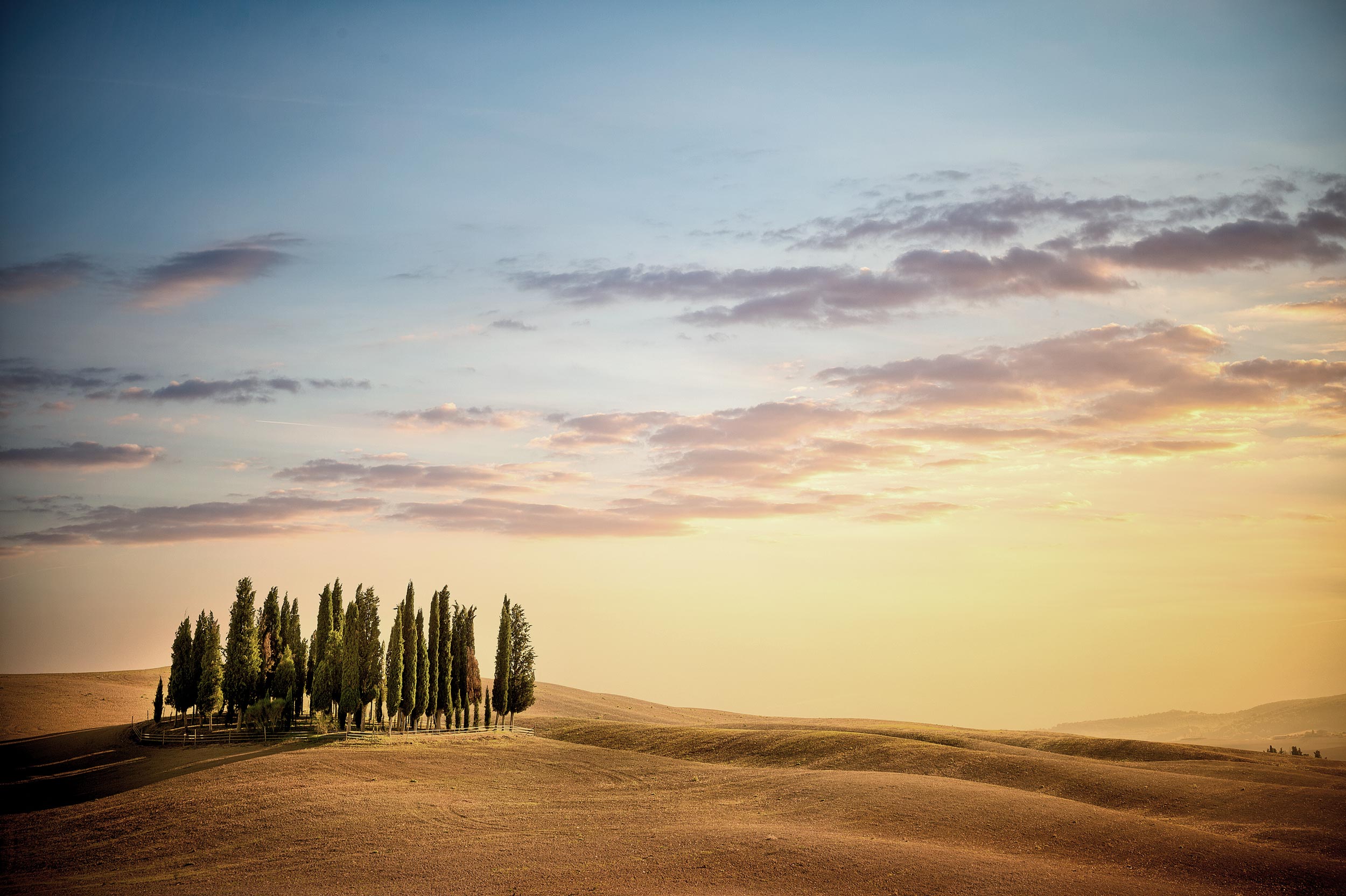
In Tuscany, abbeys like Sant’Antimo, San Galgano and Monte Oliveto Maggiore reflect the beauty of Romanesque architecture and the monastic balance between work, prayer and nature. Their cloisters, chapels and gardens remain open to visitors, offering a sense of serenity that transcends time.
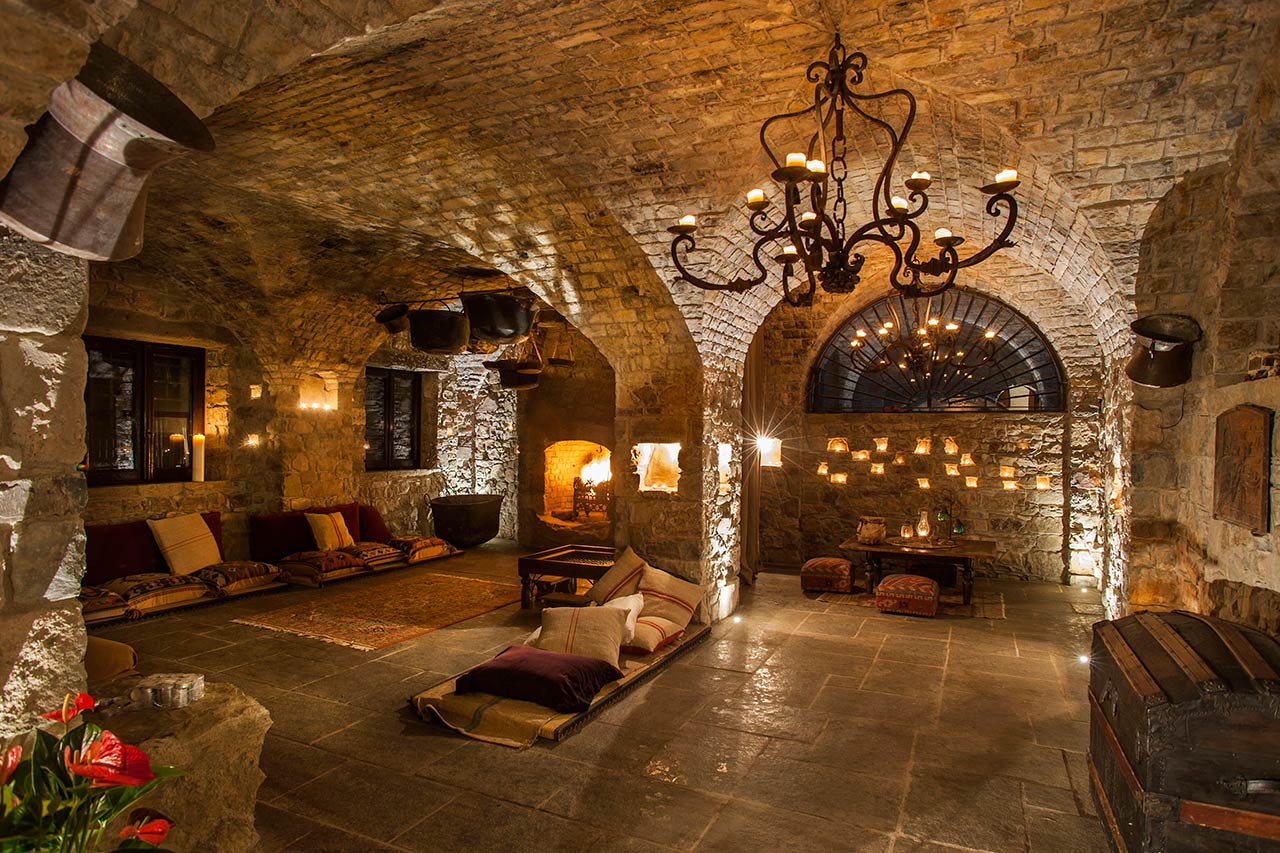
Over the past decades, some of these monasteries and hermitages have been carefully restored and now welcome guests. They preserve their sacred proportions and stone architecture, while offering refined simplicity and a contemporary sense of comfort. The spirit of the monastery remains, yet the experience is warm and sophisticated, defined by natural materials, handcrafted textiles, thoughtful lighting and quiet elegance. These retreats embody a form of hospitality where authenticity and serenity are combined with discreet, attentive service.
Further north, in the Dolomites, silence takes on a new dimension. Here, mountain lodges and forest retreats reinterpret the idea of stillness through design and nature. Large windows open toward the peaks, and guests practice forest bathing, yoga or meditation surrounded by pine forests and alpine air. The sound of the wind through the trees and the clarity of the light create an atmosphere where the mind slows and the senses awaken. These places embody a modern approach to silence, not ascetic, but deeply restorative.
Across these landscapes, the Italian art of silence expresses a shared understanding that true luxury lies in balance. It invites travellers to slow down, breathe and rediscover presence in its purest form.
Valentina Morriconi – November 2025