


The culture of thermal bathing is deeply rooted in European history, and Italy played a defining role in shaping it. Long before the Romans, the Etruscans were already using natural hot springs for ritual purification and healing. They believed the waters were a direct gift from the gods, a bridge between the human and divine worlds.
The Romans later transformed this tradition into a refined practice of health and social life. They built grand thermal complexes such as the Baths of Caracalla in Rome and Baiae near Naples, which became centres for relaxation, treatment and political conversation. The concept spread across the empire, reaching even distant provinces like Aquae Sulis in England (today’s Bath), proving how advanced and widespread Roman hydrotherapy had become.
Two thousand years later, that same culture continues to flow through Italy’s landscape. The country counts over three hundred natural thermal springs, each unique in temperature, mineral composition and therapeutic value.
Today, Italy’s thermal districts offer a remarkable variety of experiences. In some areas, visitors can stay in luxury five star wellness hotels with private spas and certified medical staff, in others, they can immerse themselves freely in natural hot springs hidden in forests. This coexistence of tradition and accessibility makes Italy’s thermal heritage both sophisticated and inclusive.
In the Euganean Hills near Padua, the waters of Abano and Montegrotto are among the most studied in Europe. Originating in the Pre Alps, they travel underground for decades, becoming enriched with sodium, bromine and iodine before resurfacing at temperatures up to 90 °C. These waters are widely used in rehabilitation therapies for their proven anti inflammatory and muscle relaxing properties.
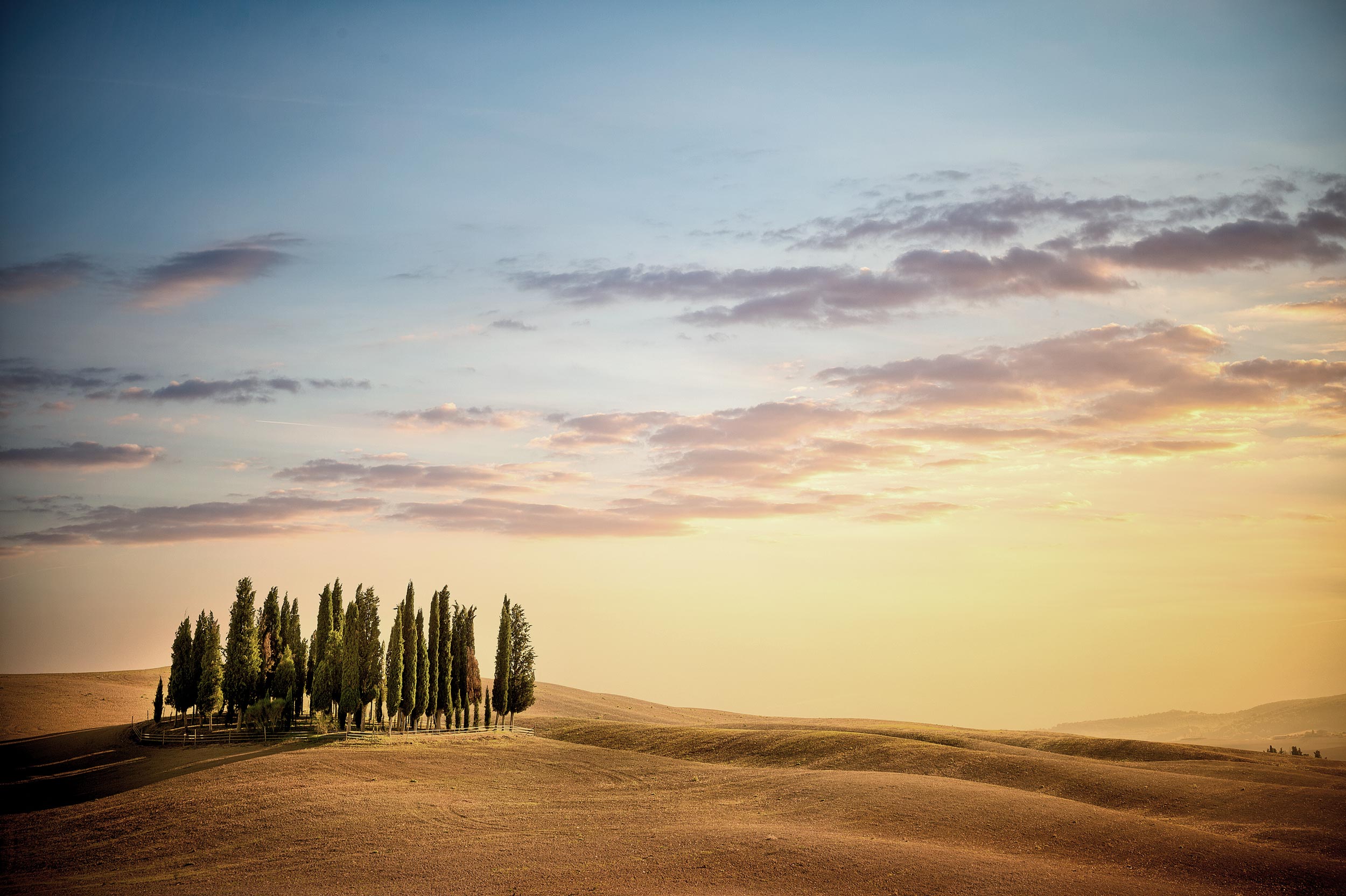
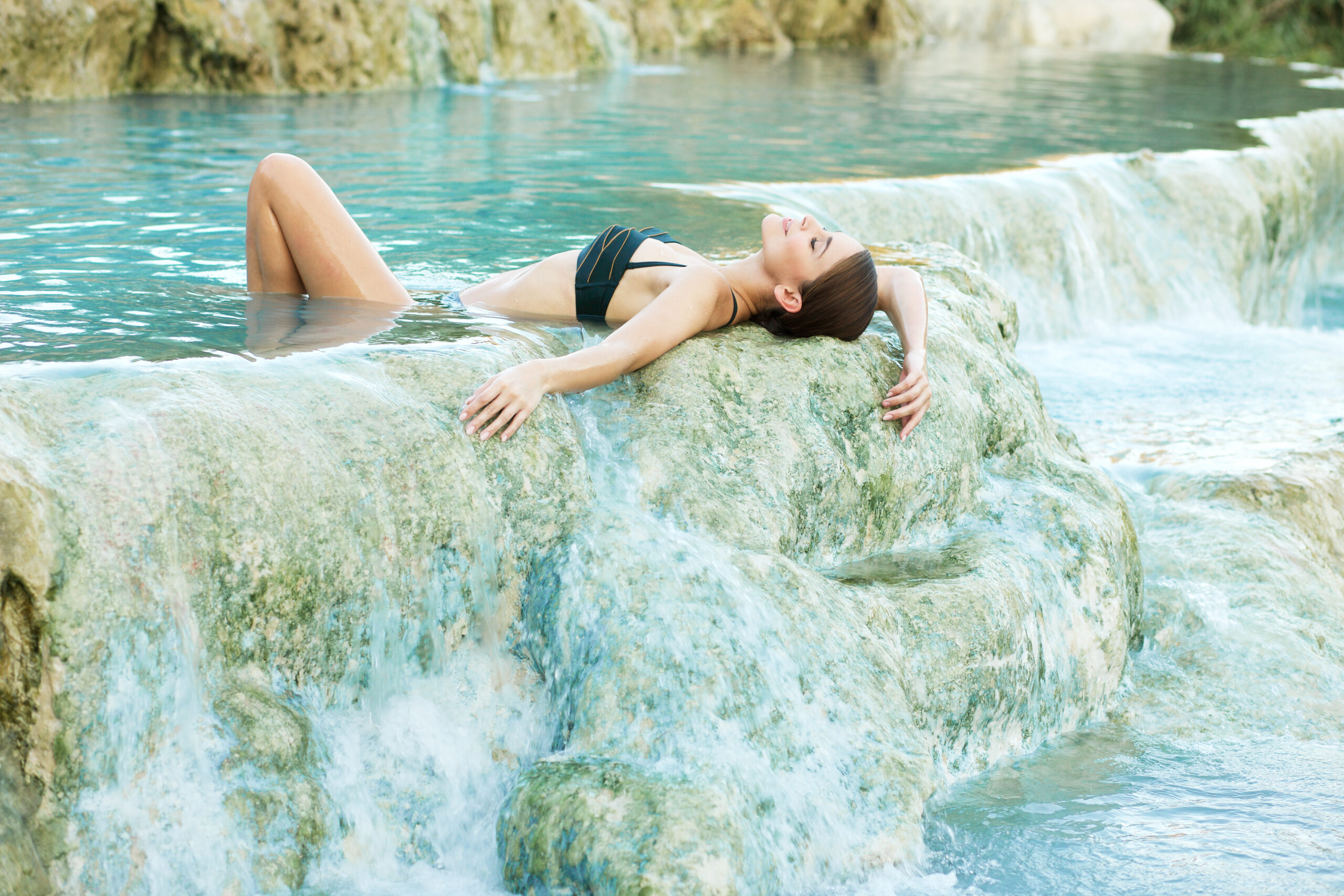
In southern Tuscany, the springs of Saturnia maintain a constant 37 °C and are rich in sulphur, known for their cleansing effect on the skin and for easing respiratory and circulatory conditions. The nearby village of Bagno Vignoni is famous for its historic central basin, where thermal water once filled a Renaissance square, still today a symbol of how wellbeing and architecture coexist in the Italian landscape.
Further south, San Casciano dei Bagni represents one of the most complete surviving examples of Roman hydrotherapy. Recent archaeological discoveries revealed intact sanctuaries, votive statues and pools dating back over two millennia. The same springs continue to be used today, their calcium and sulphate rich waters supporting detoxification and metabolic balance.
In Ischia and the Phlegraean Fields, geothermal activity creates a fusion of volcanic and marine minerals, producing waters used to treat arthritis, rheumatism and skin conditions.
Across the country, Italy’s thermal network reflects a rare combination of science, nature and culture. From the medical precision of certified spas to the simplicity of wild springs open to the public, each destination preserves a living dialogue between ancient wisdom and modern wellbeing.
Italy’s thermal waters are not a new trend, but an enduring tradition, a testament to how natural resources, when respected and understood, can sustain both the body and the spirit over centuries.
Valentina Morriconi – October 2025